Chairman Mao’s Red Braised Pork Belly
Chairman Mao’s Braised Pork Belly is an iconic classic of Hunan Cuisine. Its most distinctive feature is that it gets its rich red hue from caramelized sugar instead of soy sauce. The meat delivers a balanced flavor of sweetness interwoven with saltiness, complemented by subtle spiciness, and tastes tender yet not greasy at all. This dish shares a profound historical bond with Chairman Mao Zedong. It is the signature specialty of Shaoshan Hotel, and was selected as one of the Top Ten Classic Hunan Dishes of "Chinese Cuisine" in 2018.
Difficulty
Medium
Prep Time
20min
Cook Time
40min
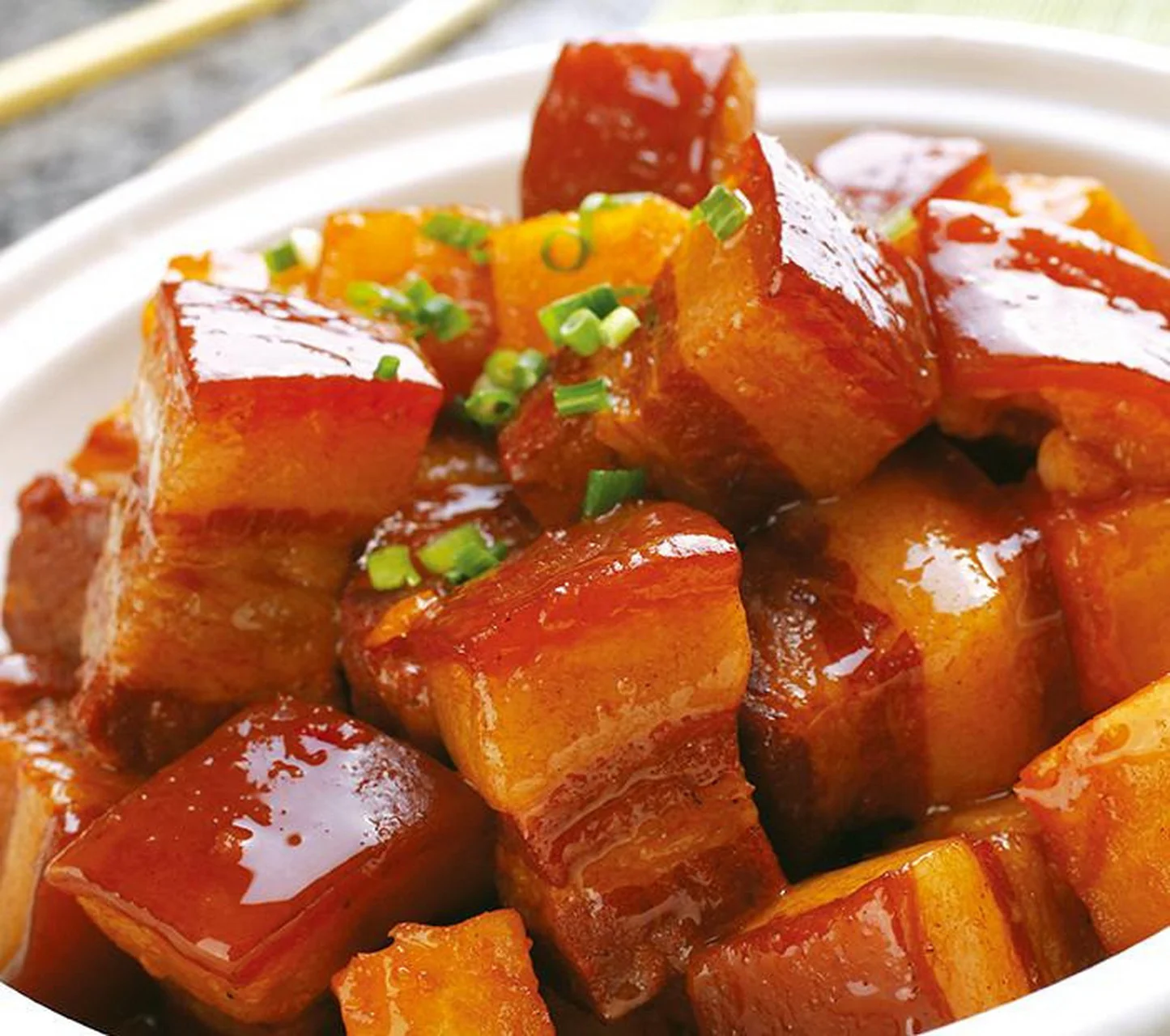
Medium · Heritage Classics
Method
Prep the Pork Belly (Key Step to Remove Gamey Odor)
- Use a kitchen blowtorch to char the pork skin black, then scrape and rinse thoroughly. If no blowtorch is available, dry-sear the pork skin directly on a hot iron wok.
- Place the whole pork belly in cold water, add ginger slices and cooking wine. Bring to a rolling boil over high heat, skim off all foam and impurities, boil for 5 minutes then remove the pork.
- Let it cool down, then cut into uniform 3cm square chunks. Evenly sized pieces yield a better-looking finished dish.
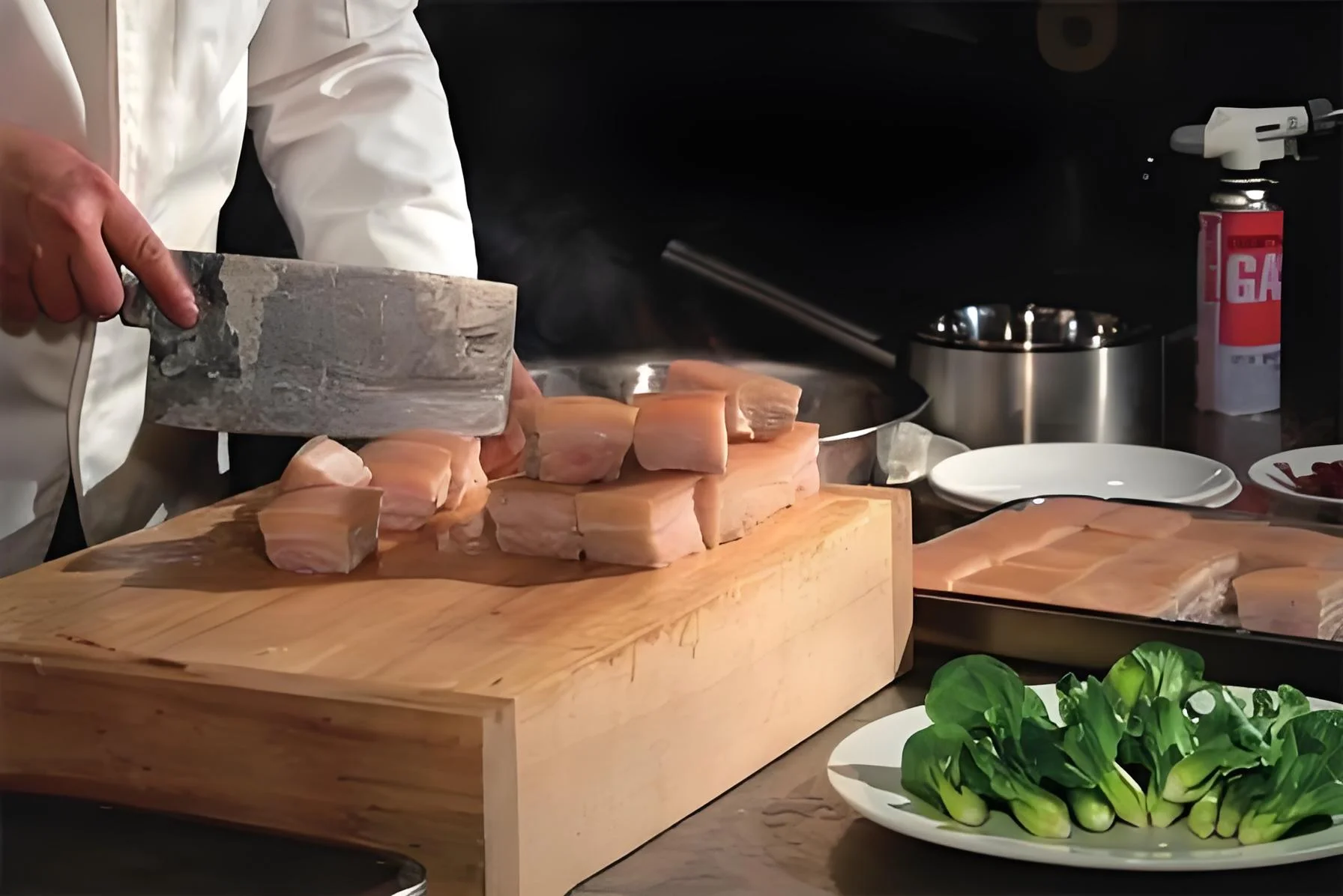
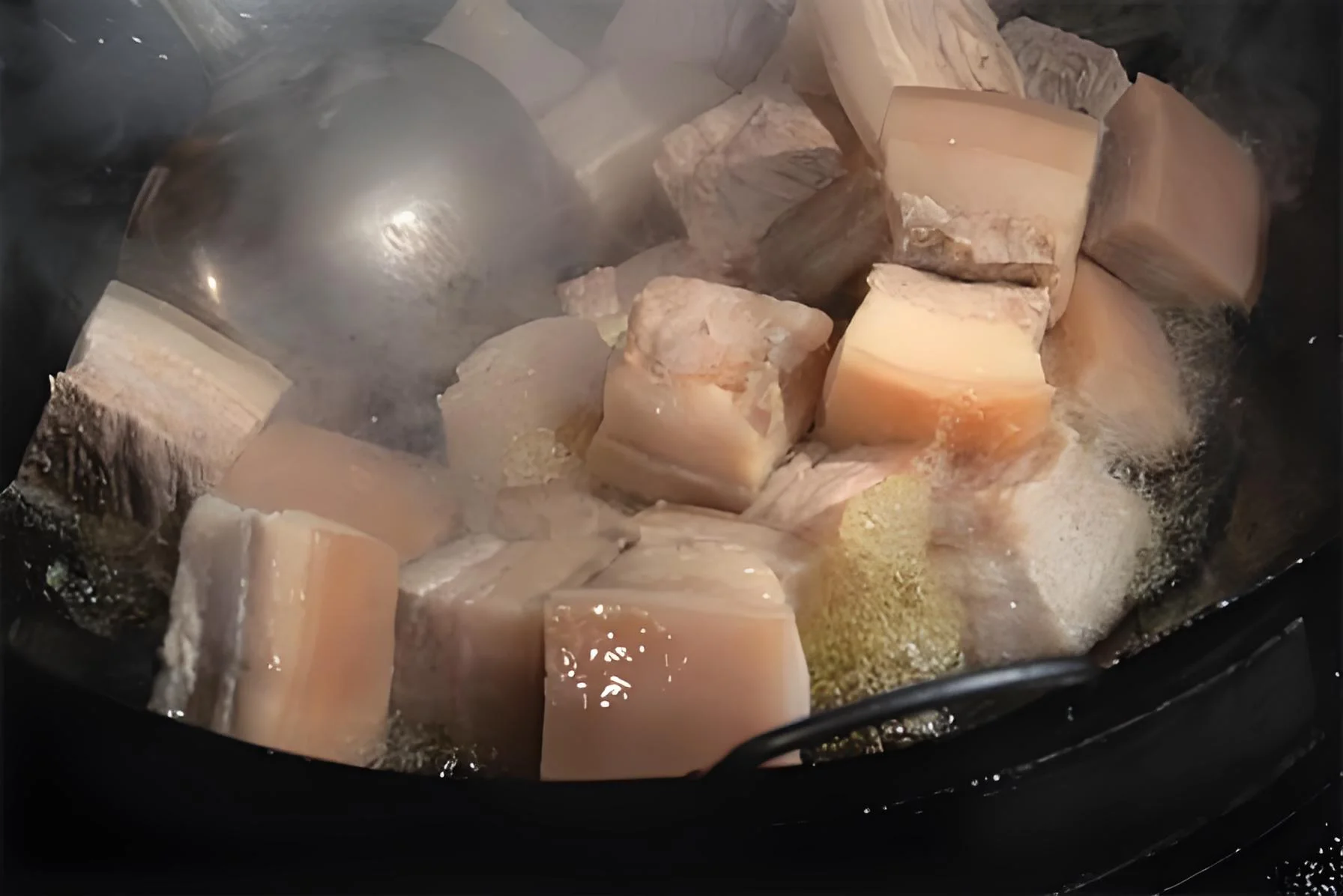
Dry-Sear Pork Chunks to Render Excess Fat
- Heat a dry wok with no oil, add pork belly cubes and slow-sear over medium-low heat.
- Sear until all sides of the pork turn pale golden and fat renders out. Pour off all excess grease to avoid greasiness, then set the pork aside.
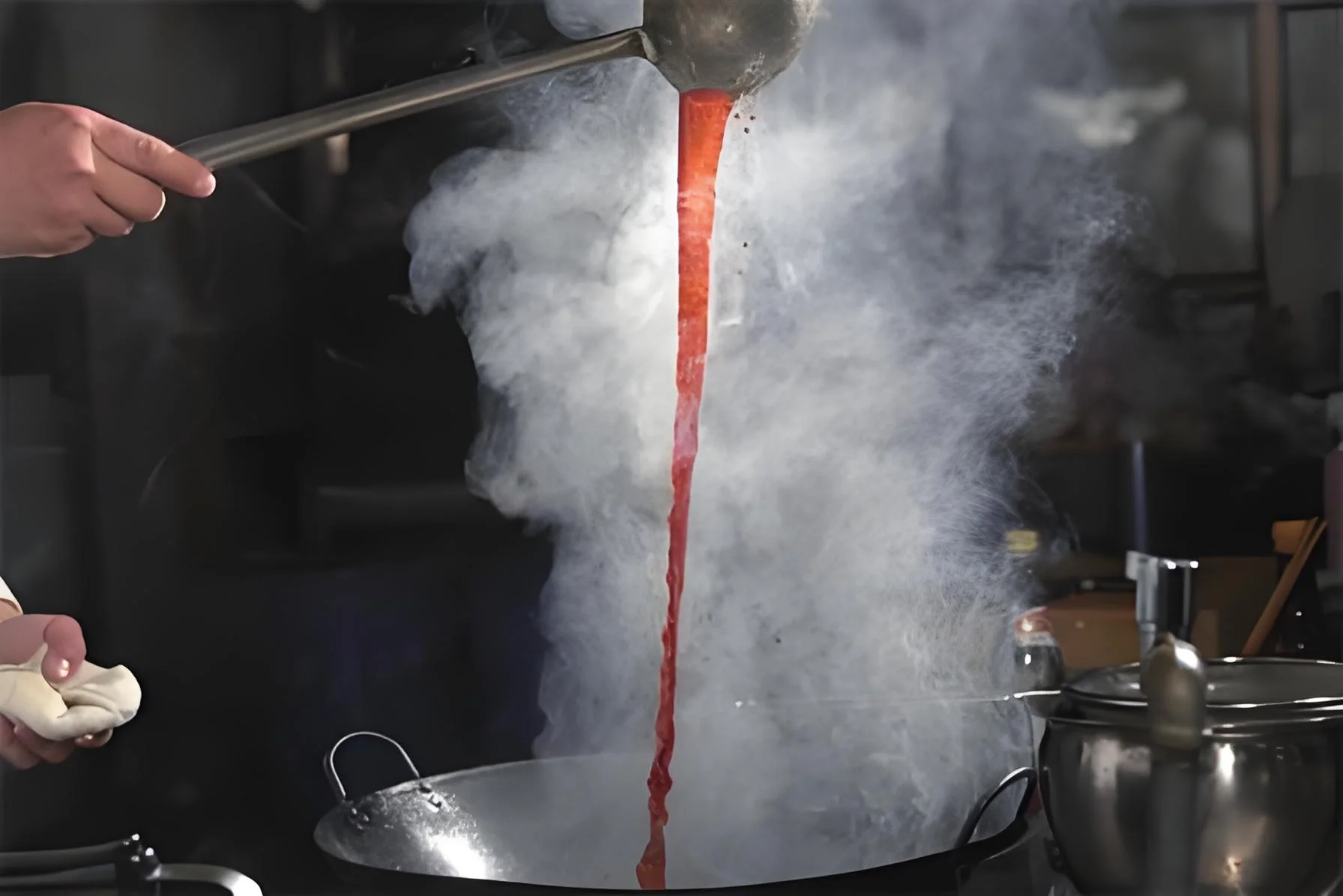
Caramelize Rock Sugar (Make-or-Break Step for the Whole Dish)
- Clean the wok thoroughly, ensure it is completely dry and oil-free. Pour in all yellow rock sugar, simmer slowly on the lowest heat.
- The rock sugar will first melt and bubble, shifting color from pale yellow → golden yellow → deep amber-red. Turn off heat immediately once fine dense bubbles form.
- Quickly pour in a bowl of boiling hot water and stir well. The amber caramel syrup is ready for later use.
Pro Tip to Avoid Mistakes: Under-caramelized sugar results in pale meat color; burnt caramel will create a bitter taste. Keep constant watch over low heat the entire time.
Sauté Aromatics & Stir-Fry with Pork
- Keep the leftover rendered fat from searing pork in the wok. Turn to low heat, add ginger slices, garlic cloves, green onion sections, dried chili peppers, star anise, cinnamon stick, bay leaves and a pinch of fermented black beans. Sauté until rich aromatic fragrance releases.
- Add the pre-seared pork belly, stir-fry vigorously over high heat for 1 minute to let the meat fully absorb aromatic flavors.
- Drizzle rice wine to eliminate gaminess and boost aroma, pour in all prepared caramel syrup. Keep stirring until every pork chunk is evenly coated with glossy red caramel glaze.
Slow Braise in Clay Pot Until Ultra-Tender
- Transfer all ingredients into a clay pot, pour in ample boiling hot water to fully submerge all pork belly cubes.
- Bring the liquid to a boil over high heat, add a small amount of salt (add salt lightly at the end to prevent meat fibers from tightening and turning tough).
- Cover the clay pot tightly, reduce heat to the lowest simmer and braise for 70–90 minutes. Cook until the fatty layer melts effortlessly on the tongue and lean meat is tender without being dry and stringy.
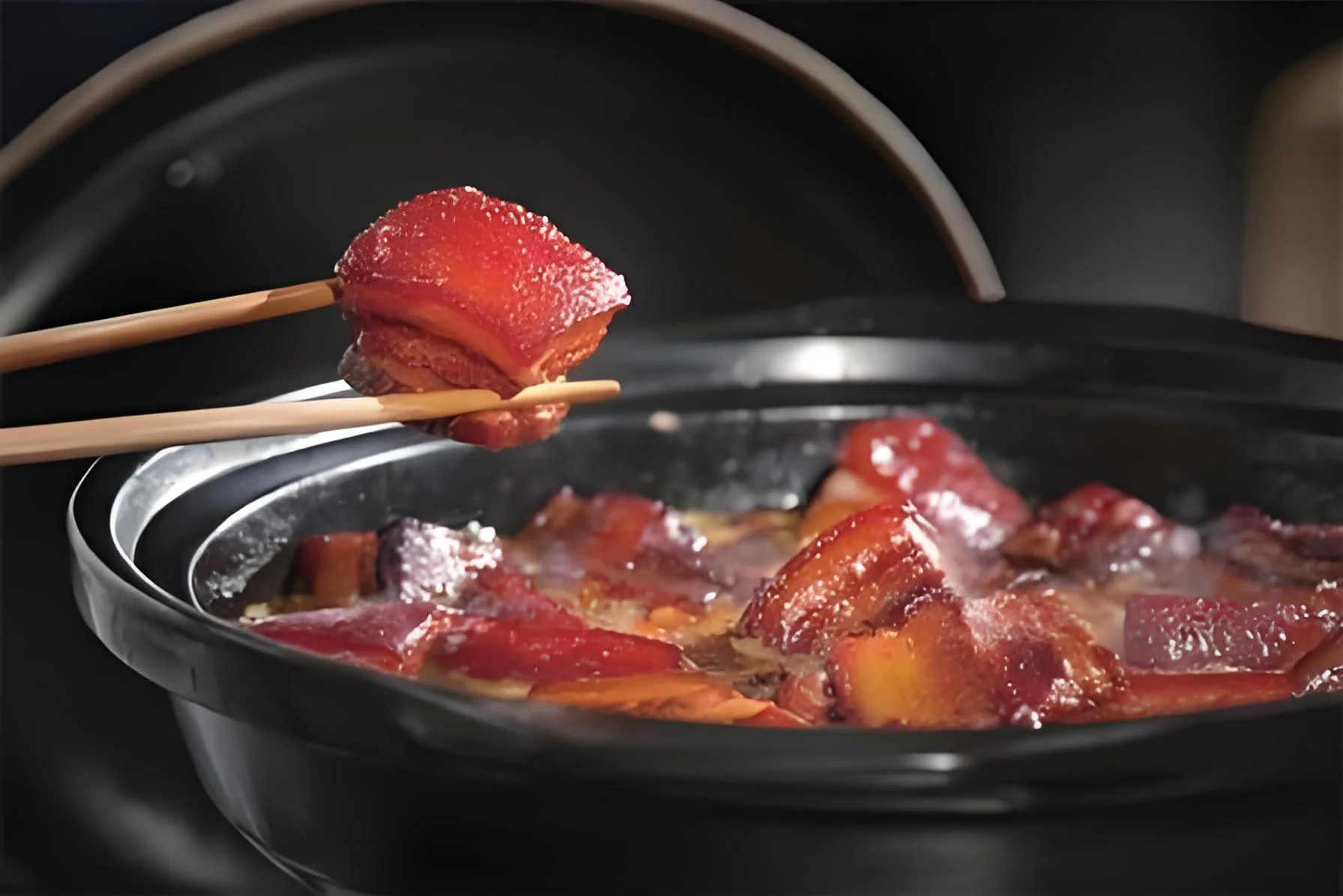
Reduce Sauce Over High Heat & Serve
- Remove the lid once braising finishes, turn to medium heat to reduce the sauce. Stir pork chunks continuously to prevent sticking to the pot bottom.
- Stop heating when the sauce thickens into shiny oily glaze that clings tightly to every piece of pork.
- Garnish with chopped green scallions, and serve directly in the clay pot.
Chef's notebook
Chef's Tips
No soy sauce is used:
Chairman Mao’s family brewed soy sauce in his early years, and he disliked its flavor. Later chefs replaced soy sauce with caramelized sugar for coloring, which became the signature technique of this dish.
Must braise with boiling hot water:
Cold water will make the pork contract sharply when chilled, leaving the meat dry, tough and stringy.
Dry-searing pork to render fat is critical for cutting greasiness:
Pour off all excess melted fat; the finished pork will be tender, soft and free of heavy grease.
Reader Reviews
0 reviews